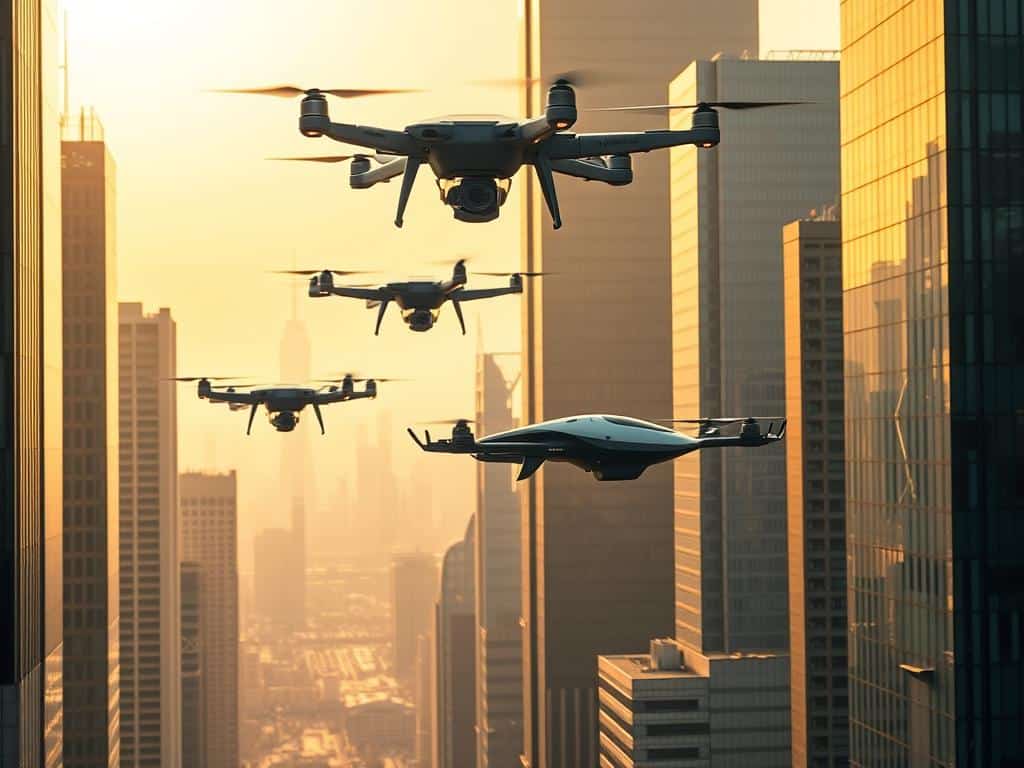
Did you know the delivery drone market might hit over $28 billion by 2026? This huge growth shows a big change in how we move things around. As someone who loves the latest drone tech, it’s exciting to watch. Drones and flying taxis are changing our cities and how we live every day. Big names like Honeywell and Joby Aviation are making these cool ideas real. Let’s dive into how these advances are changing transport and opening up new chances for quick, air-based shipping.
Key Takeaways
- The delivery drone market is expected to exceed $28 billion by 2026.
- Autonomous drones are changing the landscape of logistics and delivery.
- Flying taxis represent a new era in urban air mobility.
- Innovations by companies like Honeywell and Joby Aviation are paving the way for these technologies.
- Drone tech is becoming increasingly important in managing urban congestion.
The Rise of Delivery Drones
The arrival of delivery drones is a major event in shipping and online shopping. It changes how goods are moved and delivered. Delivery drones are advanced flying devices. They offer new ways to deal with crowded cities and the need for quick deliveries.
Understanding Delivery Drones
Delivery drones are replacing old ways of delivering, especially in cities. They send packages quickly and without contact. People like this speedy and touch-free option. Delivery drones are becoming more important in shipping every day.
Impact of Covid-19 on Delivery Trends
The COVID-19 pandemic made contactless delivery much more popular. People wanted to avoid close contact, so drones became more appealing. This change helped businesses try new ways of delivery. It kept services up while keeping people safe. The pandemic showed how useful drones could be. It led to more tests and money invested in drones.
Commercial Applications and Current Status
Now, several groups are testing delivery drones for sending small packages. Big companies like Amazon and UPS are seeing if drones work well and follow new rules. Rules are changing to help drones fit into shipping and shopping.
Autonomous Drones: A Game Changer for Urban Mobility
Autonomous drones are a big step forward in urban mobility. They mix new technologies to tackle transportation problems effectively. Utilizing AI and advanced algorithms, these drones effortlessly move through city landscapes. Their ability to fly on their own streamlines the delivery process, proving invaluable in cities looking for smarter options.
What are Autonomous Drones?
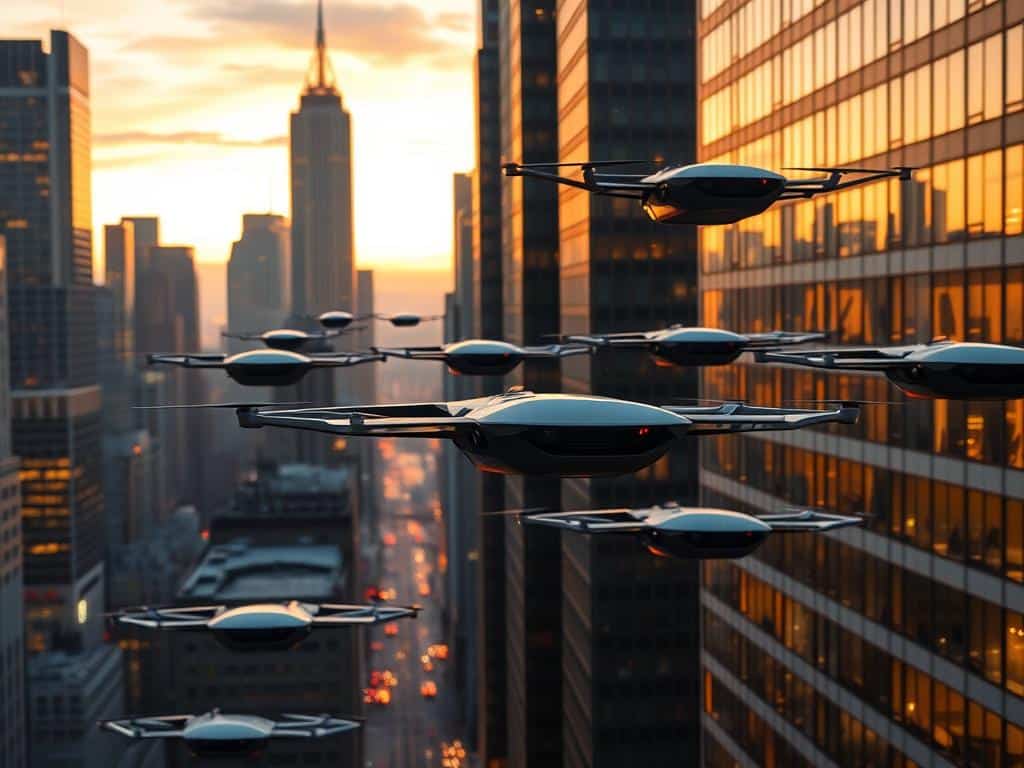
Autonomous drones are UAVs that can fly without a human pilot. They use sensors and data analysis to move around without human help. This new method is transforming urban transport, offering a fresh choice besides cars and buses. With cities getting more packed, autonomous drones can ease traffic and speed up deliveries.
Regulatory Challenges and Opportunities
The promise of autonomous drones is huge, but there are regulatory hurdles. The current laws for drones can’t fully handle the new issues from autonomous flying. It’s crucial to manage airspace rules to keep flights safe and gain public trust. Making flexible laws will help innovation and the growth of drones in cities. All parties must work together to find a safe and progressive solution for urban skies.
Flying Taxis: The Next Frontier
Urban transport is about to change, all thanks to flying taxis. These flying machines, especially eVTOLs, are setting up a new transport era. Companies like Joby Aviation are at the forefront, introducing electric aircraft for crowded cities. This shift promises to solve heavy traffic issues and offer a clean, fast way to travel.
Electric Vertical Take-Off and Landing (eVTOL) Vehicles
eVTOLs are perfect for cities because they don’t need much space to take off or land. They’re electric, so they’re quieter and cleaner than old-school planes. With the latest tech, they aim to make flying in cities safe and practical, meeting the demand for new transport options.
Real-World Testing and Implementation
Big cities like New York, London, and Dubai are already testing flying taxis. These tests show how they can make trips quicker in city settings. As these tests move forward, making sure they’re safe and getting the right approvals will be key. This will help flying taxis truly change how we get around cities.
Conclusion
Looking back at the growth of delivery drones and flying taxis, it’s clear our travel ways are set to transform. Autonomous tech is a game-changer, boosting how we handle goods and get around. Drones bring the perks of lesser traffic jams and greener delivery options.
This change is driven by the need to solve city problems better. Our cities are changing fast, and using drones is a step towards smarter transport networks. With tests and new rules being made, a strong foundation for flying taxis and drones is being built. This opens up new opportunities for getting around in cities.
Looking forward, the thought of how these tech breakthroughs might change our transport experience is thrilling. With ongoing improvements, drones and flying taxis show great potential to make logistics better and city living more enjoyable. Indeed, we’re on the edge of a new exciting transport era. This era will deeply change the way we travel, ship items, and connect in our cities.
