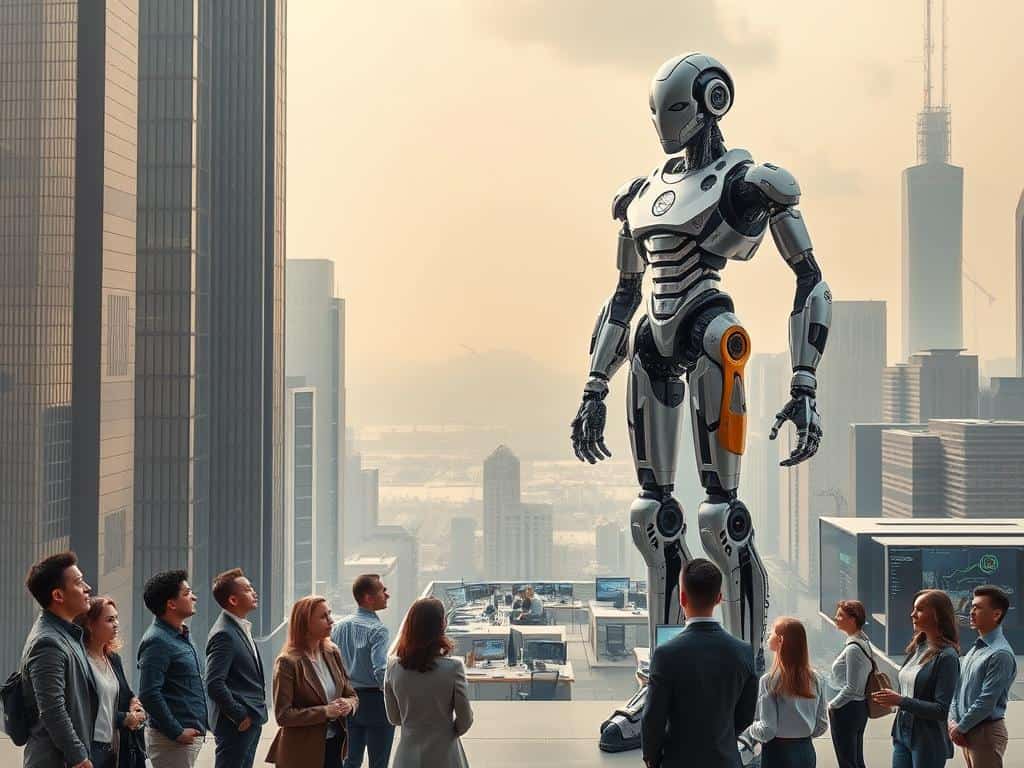
Did you know that by 2050, 60% of jobs might change a lot because of AI? This raises a big question: will automation make many jobs disappear? Experts from places like PwC, McKinsey, and the World Economic Forum say we’re at a key moment. They think it could take 10 to 30 years to see how AI changes work.
With the U.S. facing a huge $36 trillion debt, it’s more important than ever for workers to get better at their jobs. People like Ray Dalio and Larry Fink say we need to act now to deal with the changes brought by automation.
In this article, I’ll show which jobs are most at risk. I’ll also talk about the skills you need to stay ahead in a changing job world.
Key Takeaways
- 60% of jobs may need adaptation by 2050 due to AI advancements.
- The timeline for AI’s impact ranges from 10 to 30 years.
- The U.S. is facing economic challenges, including a $36 trillion debt.
- Proactive skill enhancement is key for job security in the future.
- Experts stress the need to adapt to automation trends.
Understanding AI’s Impact on Future Careers
The world of work is changing fast because of AI. It’s making big changes in many industries. Companies like Spotify and Netflix show how AI makes things more efficient. This means jobs are changing, moving from simple tasks to more complex ones.
AI Advancements and Job Transformation
This change opens up new career paths for people. It makes them more adaptable in a world where simple tasks are at risk. Jobs like customer service and data entry are being taken over by machines.
But, fields like healthcare and education are doing well. They need people with skills that machines can’t match. These skills include being able to connect with others and make decisions based on feelings.
Critical Skills for Remaining Competitive
To do well in this new job market, I need to focus on key skills. Skills like thinking critically, being tech-savvy, and understanding emotions are very important. As jobs that involve just data and admin tasks disappear, being able to solve complex problems and work well with others will be key.
It’s also important to keep learning and ask for training. By focusing on areas less affected by AI, I can stay relevant in the job market.

The AI Job Market: Which Jobs Are at Risk?
The AI job market shows clear differences in job risk. Reports say some jobs are more at risk because they are repetitive. Cashiers, truck drivers, and paralegals are examples of jobs that could see big changes.
Experts agree that jobs with little human interaction are at high risk. They think about 60% of admin tasks could be done by machines.
Technology is also changing creative jobs. Journalism and design are facing new challenges. This makes us wonder about job security in stable fields.
But, some jobs are not at risk. Nursing and therapy need empathy, which AI can’t match. High-level management jobs also require skills like emotional intelligence that AI lacks.
In tech fields like engineering and software development, the outlook is mixed. Simple tasks might be automated, but complex problem-solving and creativity are needed. This shows humans are essential in these areas.
Conclusion
We are on the brink of big changes in how we work, thanks to AI. Seeing AI as a partner, not just a threat, opens up new job opportunities. It lets people adapt their careers, leading to more rewarding work.
Job market insights show we need to focus on adapting to AI’s impact. Companies should invest in training and upskilling. This way, they can prepare their workforce for AI and tackle fairness issues.
The future of work relies on our ability to adjust and work well with AI. We must make sure everyone benefits from these changes. By doing this, we can build a strong job market that values both people and technology, ushering in a prosperous era.
