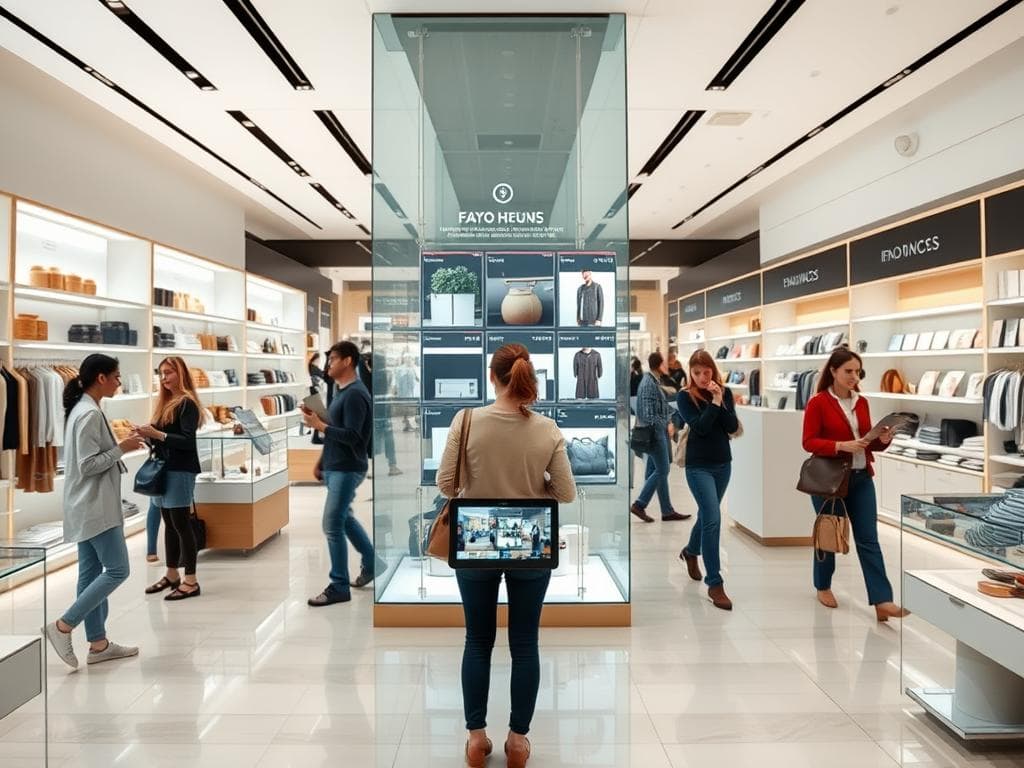
Did you know 71% of consumers want to shop more with augmented reality (AR)? This shows AR in shopping is more than just a future idea. It’s changing how we shop today. AR mixes digital and real worlds, giving us a new way to see products.
Brands are using this tech to improve shopping and increase sales. With e-commerce growing, AR is changing how we buy things. Now, we can try on clothes or see furniture in our homes online.
Key Takeaways
- AR enhances customer engagement and confidence in purchasing decisions.
- Retail technology is rapidly evolving, making the shopping experience interactive.
- Virtual try-ons and home visualizations are becoming mainstream.
- The fusion of digital and physical shopping is reshaping consumer expectations.
- AR has the potential to significantly boost sales and customer loyalty.
Understanding Augmented Reality in Retail
Exploring the mix of technology and shopping, the definition of AR shines. Augmented Reality (AR) blends digital and real-world elements. It makes shopping a unique experience where virtual content meets real views.
Definition and Overview of AR Technology
AR in retail changes how we shop. It uses digital overlays to add cool features to products. Customers can see how furniture or clothes fit in their homes or on their bodies.
This innovation makes shopping better and helps customers choose wisely.
How AR Enhances the Shopping Experience
AR changes the shopping journey a lot. It lets customers get product details, see 3D models, or try products virtually. This tech makes buying easier and more fun.
By making shopping richer, AR technology in retail boosts customer happiness and loyalty.
The Role of AR in Customer Engagement
Augmented reality (AR) is changing how we shop. It makes shopping more fun and interactive. AR apps add cool visuals and boost how confident we feel about what we buy.
Statistics on AR and Consumer Confidence
AR is making shoppers more confident. A study found 56% of people trust products more when they use AR. This trust helps retailers sell more.
Retailers who use AR are ahead of the game. They connect with customers better, leading to more sales.
Examples of AR Implementation by Retailers
Many big brands are using AR to improve shopping. IKEA and Sephora let customers see products in their homes or try makeup virtually. This makes shopping more exciting and increases sales.
By focusing on AR, these brands meet today’s shopping needs. They show how important it is to engage with customers.
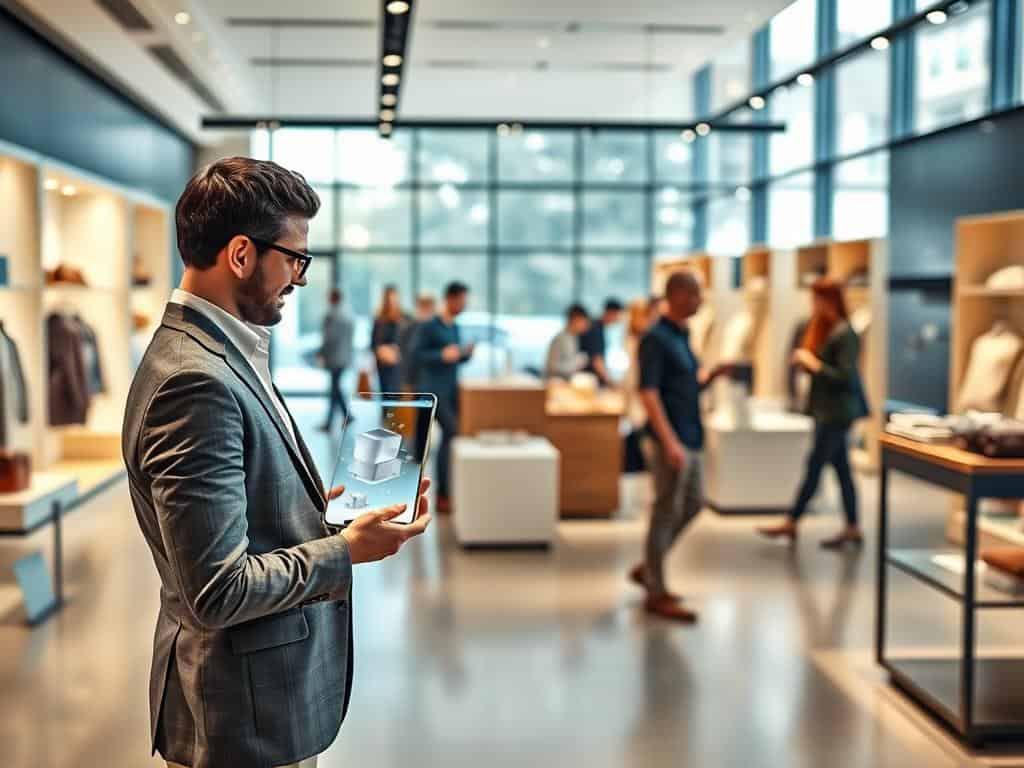
AR in Shopping: Transforming Sales and Revenue Streams
Augmented reality in retail has changed the game. It makes shopping better and boosts profits. AR helps customers feel more confident when they buy things. This change is big for how people shop.
Increased Conversion Rates Through AR Experiences
AR technologies have greatly improved sales. They let customers try products virtually. This makes them more likely to buy.
Studies show AR boosts sales, even for expensive items like electronics. This shows AR is good for business.
New Revenue Opportunities Created by AR Applications
AR apps have opened new ways for retailers to make money. Brands can use AR to make ads more engaging. This includes virtual showrooms and interactive displays.
These tools let customers see products in their own space. It makes them want to buy right away. This new approach meets today’s shopping habits.
Conclusion
Augmented reality is changing retail in big ways. It’s making shopping more interactive and focused on the customer. As tech gets better, AR will become even more common in stores.
Businesses are working hard to use AR well. They’re using new tech to make shopping better. This could lead to more sales and new ways to make money.
The future of retail depends on how well stores use AR. If they do, they’ll meet customer needs better. This will make shopping better and help them stay ahead in the market.
