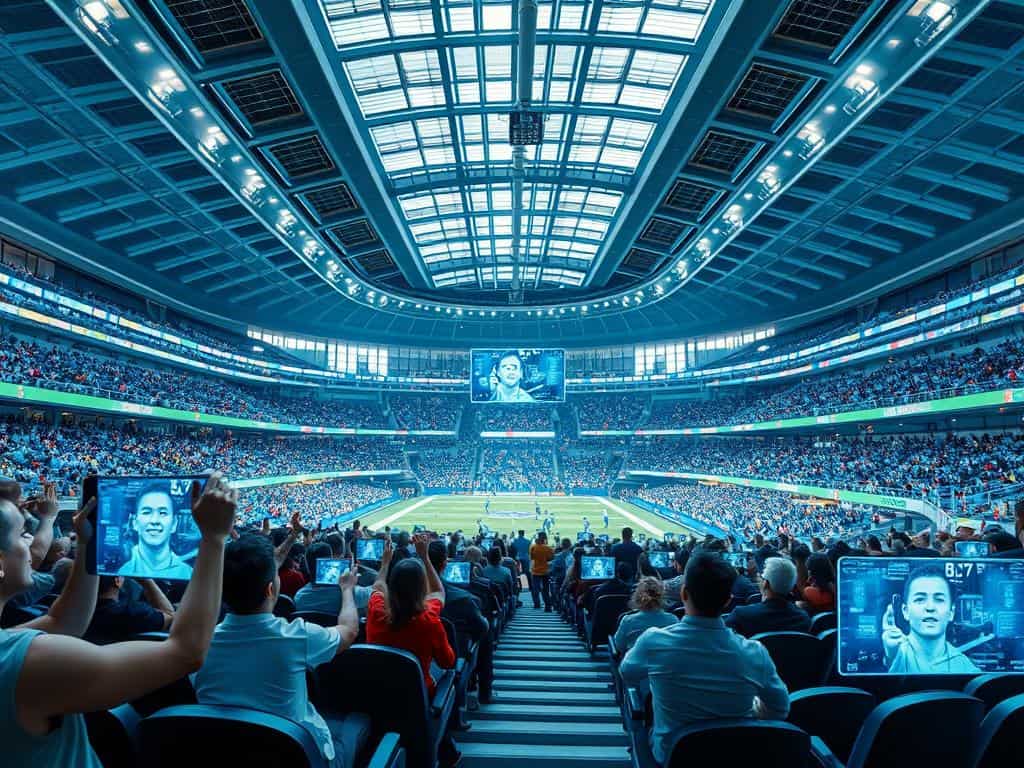
By 2025, the smart stadium market could top $5 billion. This huge growth shows a big change in sports experiences. Smart stadiums mix advanced tech with awesome fan experiences.
They offer live data and easy connections. This turns regular events into amazing ones. Plus, the growth of virtual fans and online events is creating exciting new ways to enjoy sports. It makes it hard to tell the difference between being there in person and watching from afar.
This change isn’t just making stadiums run better. It’s also changing how I support my favorite teams. I’m excited to see how these new techs are shaping sports. It’s an exciting time for fans all around.
Key Takeaways
- The global smart stadium market is projected to surpass $5 billion by 2025.
- Smart stadiums are enhancing fan experiences through advanced technology.
- Real-time data analytics play a crucial role in operational efficiency.
- Virtual fans are becoming a vital component of sports engagement.
- Digital events are redefining how fans connect with their favorite teams.
- Sports tech is paving the way for immersive game experiences.
Understanding Smart Stadiums and Their Technology
Smart stadiums are changing how sports venues work. They make games better for fans and help manage stadiums more effectively. By using smart tech, like AI, these places become a mix of advanced solutions. They aim to make fans more involved and operations smoother. High-speed Wi-Fi, augmented reality, and sensors for crowd watching are key technologies. They create an interactive and smooth fan experience.
What Makes a Stadium “Smart”?
A “smart” stadium uses advanced tech to make visiting safer and more enjoyable. It focuses on improving comfort and keeping fans engaged. With AI analytics, stadiums get real-time data on how crowds behave. This boosts security and helps with planning. Smart tech also speeds up entering and leaving, so fans have more time for fun.
Technologies Transforming Fan Experiences
New tech is changing how fans enjoy sports. For instance, facial recognition makes getting in easier and safer. Then, augmented reality lets fans see player stats and cool visuals in new ways. These changes help fans feel more part of the game. They bring the excitement of sports to life.
Case Studies: Cleveland Browns and Atlanta Falcons
The Cleveland Browns have made getting into games faster with their “Express Access.” This system uses quick facial checks. It makes fans happier because they can skip long lines. The Atlanta Falcons also use smart tech at the Mercedes-Benz Stadium. Fans can order food from their phones, avoiding waits. These changes show how tech can make games more fun and run smoother.
The Future of Sports: Virtual Fans and Digital Events
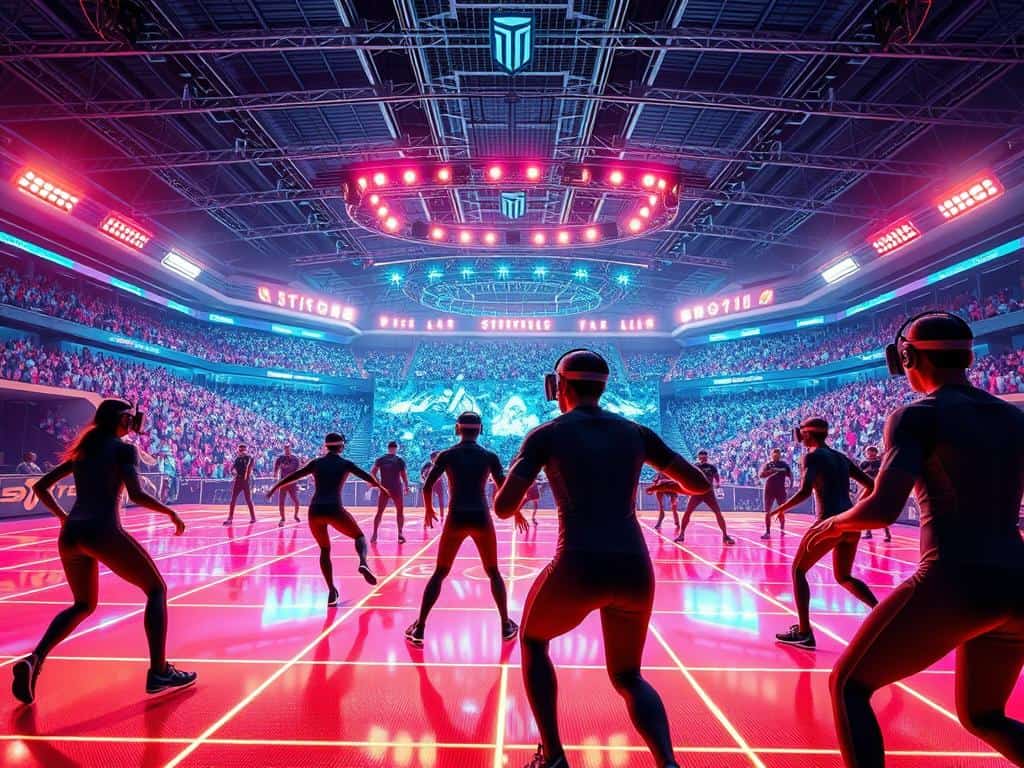
The world of sports is changing fast, thanks to virtual reality. This cool tech is changing how we, the fans, connect with our favorite teams and stars. Now, we’re not just watching games on TV. We’re going to virtual events and playing interactive games.
The Rise of Virtual Reality in Sports
Virtual reality is leading this big change, letting me dive into sports in exciting new ways. From my couch, I can be at a game or in a virtual world, playing alongside athletes. It feels like I’m right there, part of the game, which makes it all more thrilling.
Gamification and Fan Engagement
Gamification is also making sports more interactive for fans. Instead of just watching, now we’re part of the action, competing and showing off our skills. Taking part in challenges and esports leagues brings fans together from everywhere. It makes each game way more entertaining for me.
Innovative Digital Events and How They Connect Fans
Brands are now creating cool digital events to bring fans and teams closer. From online mini-games to chats with athletes, they’re finding new ways to make connections. Features like virtual meet-and-greets make me feel like a bigger part of the sports world. This new approach is making fan experiences better and setting new trends for the future.
Conclusion
When I think about sports today, it’s clear how much technology changes things. Smart stadiums are a big deal in this change. They offer cool features that make going to live events way better. We’re talking about stuff like getting in with your fingerprint and feeling like you’re in the game with virtual reality.
Using tech in sports isn’t just about making things cooler. It’s also about connecting fans and teams in new ways. Digital platforms let fans and teams get closer than ever. This makes being a fan more fun and interactive. It’s thrilling to see how these steps forward will help fans feel closer to the action and might even help teams make more money.
With smart stadiums and online stuff getting better, being a sports fan is getting more exciting. I’m really looking forward to what’s coming. The old limits of being a fan are disappearing, showing us a future full of new possibilities. We’re moving towards an experience that’s about more than watching from the sidelines. It’s going to change how we connect with the sports we love.
