
I’m diving deep into the world of photography. I’ve learned that mastering it can turn simple moments into breathtaking images. If you’re curious about starting with photography, knowing the basics is key. There’s much to discover, from how light works to creating a great composition. This guide is here to offer you essential tips, especially for beginners. So, let’s start this fun adventure with the core elements of amazing photography.
Key Takeaways
- Photography is about transforming ordinary into extraordinary.
- Understanding light, composition, and technical settings is crucial.
- Practice regularly and learn from every shot you take.
- Embrace mistakes as part of the learning process.
- Natural lighting can dramatically improve your images.
- Building a strong foundation is key to becoming a better photographer.
Understanding the Exposure Triangle
Learning about the exposure triangle is key in photography. It has three important parts: ISO settings, aperture control, and shutter speed. Knowing how these work together improves my photos.
ISO: Sensitivity to Light
ISO shows how sensitive my camera is to light. In bright light, a low ISO keeps images clean. But in low light, a high ISO helps me take pictures without losing speed or aperture. Getting ISO right helps my photos look good while capturing fine details.
Aperture: Controlling Light and Depth of Field
Aperture size affects light entry and depth of field. A big aperture (low f-stop) lets in more light and blurs the background. This is great for portraits. A small aperture sharpens the whole scene, perfect for landscapes.
Shutter Speed: Freezing Action vs. Motion Blur
Shutter speed is about how long light hits the camera’s sensor. A quick shutter speed stops motion, important for fast subjects. A slow speed adds blur, showing movement. Learning to change shutter speed adds creativity to my shots.
How to Start Photography: Essential Tips for Beginners
Photography beginnings are both thrilling and a bit scary. There’s a lot to think about. I’ve noticed concentrating on a few areas is key. Learning basic tips, using natural light, and mastering composition can boost my skills greatly.
Practice Often and Embrace Mistakes
The photography journey is a great learning path. Practicing a lot is essential for me. Playing with different settings and subjects shows me what I love. And mistakes? They’re steps to getting better, teaching me more each time.
Lighting: Make the Most of Natural Light
I’m drawn to the beauty of natural light in photos. Taking pictures during “golden hour” adds warm, soft light. It brings out amazing textures and colors, making ordinary views stunning. It’s worth using natural light to see its effect on photos.
Focus on Composition: Rule of Thirds and Negative Space
Good composition makes photos stand out. The rule of thirds helps me position key elements. It makes my shots dynamic. Using negative space well also emphasizes my subjects, making the shots more compelling.
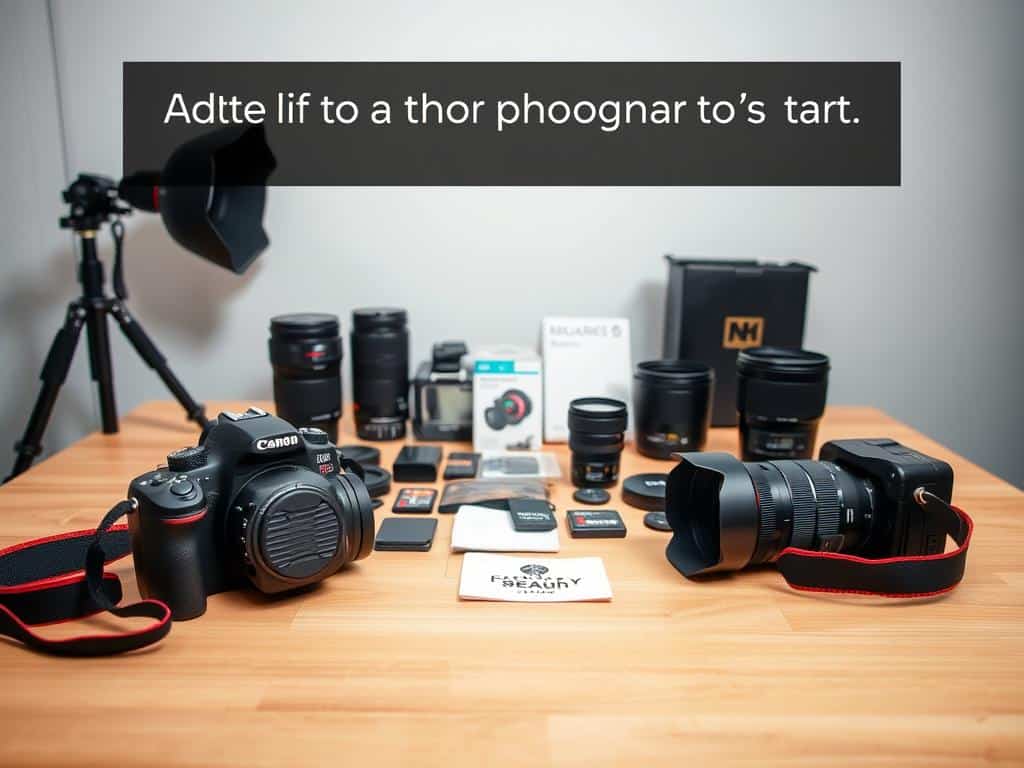
Camera Tips and Equipment for Beginners
Starting in photography means learning the art and the crucial gear needed for great photos. Picking the right camera is key, even though it can seem hard. With the right camera, I can handle many situations without lots of equipment.
Choosing the Right Camera for Your Needs
I looked for a camera with features that fit how I take pictures. It’s important to think about size, weight, and what the camera can do. I had to choose between a DSLR or a mirrorless camera and testing them out really helped me decide.
Understanding Camera Modes Beyond Auto
Exploring camera modes beyond auto made my photos better. Manual and semi-manual settings, like aperture priority, gave me more creative power. I learned to use these settings to get the effects I wanted, improving my photography skills.
The Importance of a Tripod for Stability
A quality tripod is something I strongly recommend. It’s crucial for stability, especially in low light or for long exposures. A good tripod prevents camera shake, helping me take sharp, clear photos. Buying a sturdy tripod was one of my smartest purchases.
Conclusion
As we end this guide on photography basics, we see it’s a thrilling yet tough path. Learning about ISO, aperture, and shutter speed builds our skills. Tips and techniques for beginners are shared, pushing us to try and learn from errors.
Photography is more than just hitting a button; it’s an art that lets us be creative. Using natural light or getting composition right, every photo helps us improve. The more we learn, the more we understand that each moment teaches us something.
As we aim to capture the world, we must keep curious and open. Try out different photography styles and techniques. Our photography path never ends, and every picture we take helps show our unique view through visuals.
