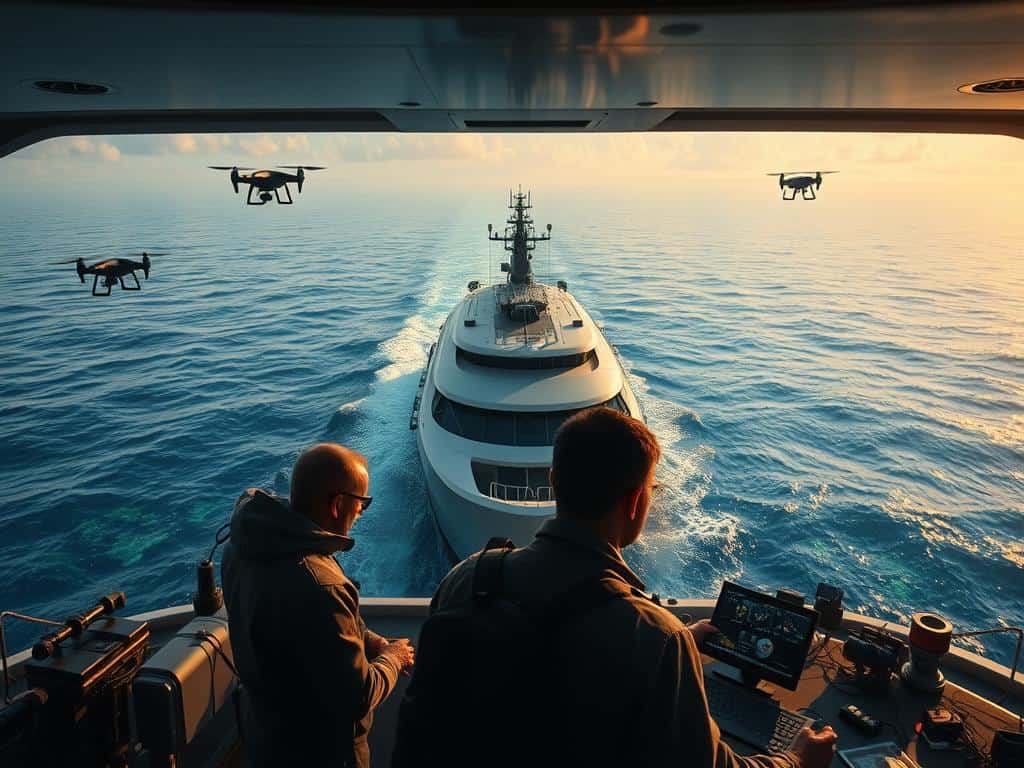
Did you know more than 60% of Earth is covered by oceans, yet under 5% is explored? This fact reveals a huge potential for discovery beneath the waves. In looking into the future of ocean exploration, the use of marine technology and new methods of underwater exploration excites me. These innovations could help us better understand climate change and protect crucial ecosystems. The UN Decade of Ocean Science for Sustainable Development emphasizes the importance of exploring these unknown waters. It promises discoveries that could critically shape our planet’s future.
Key Takeaways
- Less than 5% of the ocean has been explored, showcasing the tremendous opportunity for discovery.
- Marine tech advancements are crucial for enhancing underwater exploration methodologies.
- Understanding the ocean can significantly impact climate change and biodiversity efforts.
- Collaboration through global initiatives like the UN Decade of Ocean Science is vital for sustainable ocean management.
- New technologies are continually evolving, making ocean exploration more accessible and efficient.
The Importance of Ocean Exploration
Exploring our oceans is crucial for knowing more about climate change and marine life importance. The deep, unknown waters hold secrets that help us make better choices for the environment. By exploring, we find important information to protect and support marine life and people who rely on it.
Impact on Climate Change Understanding
The ocean is key in controlling the Earth’s temperature. It absorbs most of the extra heat from greenhouse gases. This changes where species live and how they survive. By studying the ocean, we can better predict and fight climate change.
Understanding the ocean helps us plan for its conservation. We discover how it remembers environmental patterns over time. This knowledge is essential for protecting our seas and the life within them.
Ecological Significance and Biodiversity
Oceans are vital as they produce much of our oxygen and are home to many creatures. About 2 million species live in the deep sea, and most are yet to be discovered. Exploring these depths helps us understand and protect this diversity, crucial for a healthy planet.
Supporting Global Livelihoods
Over 3 billion people depend on the ocean for their food, fun, and work. By knowing more about marine ecosystems, we can use resources without harming marine life. Exploration lets us collect important data, guiding rules and actions to protect ocean-based livelihoods for the future.
Innovative Technologies Driving Ocean Exploration Future
Technologies are key in growing ocean exploration. Underwater robotics let us see parts of the sea that were too deep before. The Nippon Foundation-GEBCO Seabed 2030 Project shows the need to map the ocean’s bottom. Right now, we’ve only mapped 26.1% of it.
Advances in Underwater Robotics
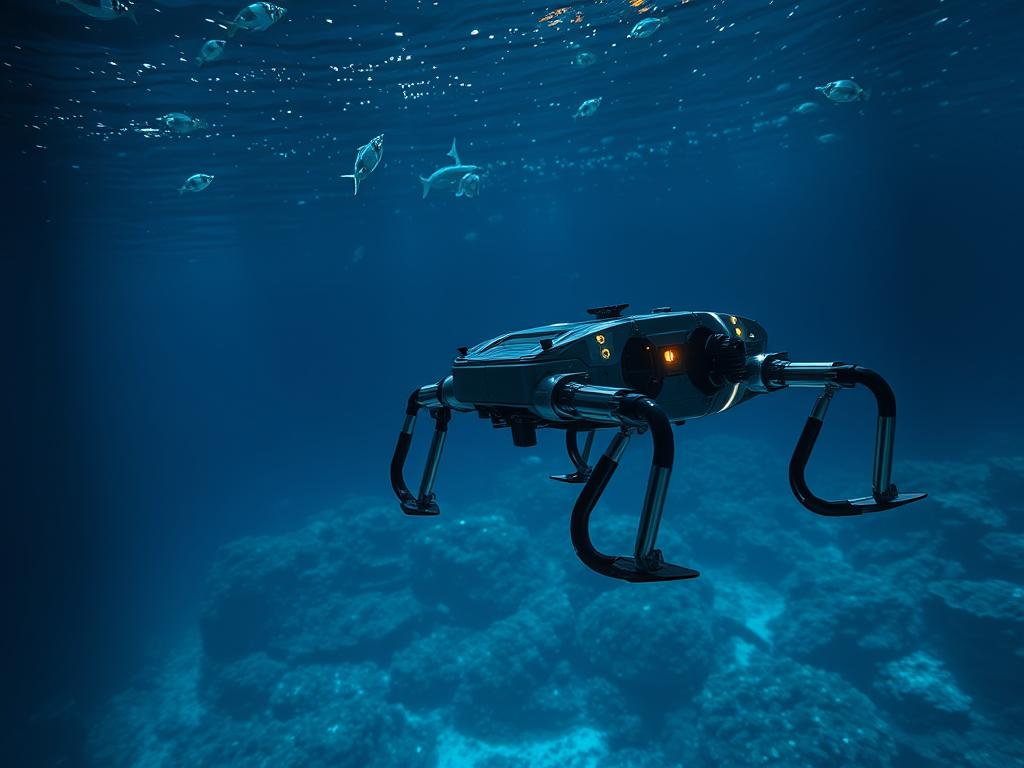
Underwater robotics have changed how we explore the ocean. These robots can now handle tough conditions and collect important data. They make it easier to learn about life under the sea.
Marine Tech: AI and Deep-Sea Mapping
AI is revolutionizing how we analyze ocean data. Partnerships, like SeaDeep and Seabed 2030, prove AI’s role in marine science. AI makes sorting through exploration data quicker, helping us understand ocean life better.
Remote Operated Vehicles and Their Capabilities
ROVs are crucial for studying difficult underwater areas. I’ve seen how versatile they are, doing many scientific jobs. They give us a close look at ocean wildlife, aiding in protecting these areas.
Discoveries Highlighting the Depths
Delving into recent marine discoveries, the underwater world shows us its amazing diversity. Deep-sea explorations uncover life forms adapted to the harshest conditions. These ventures offer more than beautiful sights; they deepen our understanding of marine ecosystems and how different species evolve and interact.
Unveiling Hidden Species and Ecosystems
Each deep dive brings to light new species, like unique corals and eerie anglerfish living in the dark. Near hydrothermal vents, vibrant ecosystems thrive, challenging our views on life in extreme spots. These findings prove that life can adapt to the toughest conditions.
New Insights into Geological Activities
New insights on Earth’s geology are as thrilling. Scientists are mapping the formation of underwater mountains and tracking tectonic plates’ movements. These geological processes not only shape our planet but also impact marine life. Such discoveries link geological changes with the richness of ocean life, portraying the sea as a constantly changing world.
Conclusion
The future of ocean exploration is filled with exciting possibilities. These promise to deepen our understanding of marine environments. As we look at the progress in marine science and technology, it’s clear that big discoveries are near. With new tools and efforts like the Ocean Decade, our knowledge of the ocean and its secrets is growing.
Exploring the ocean does more than find new species. It helps us understand our planet’s health. This information is key for fighting climate change, saving wildlife, and helping communities that rely on the ocean. Each trip underwater can show us important data for tackling these big issues.
In diving into marine science, we remember our goals aren’t just for science’s sake. It’s about making sure the oceans stay healthy for everyone in the future. By choosing to explore, understand, and protect these crucial areas, I’m hopeful for a better future. Let’s keep exploring the secrets under the sea, as they are vital for our world’s health.
