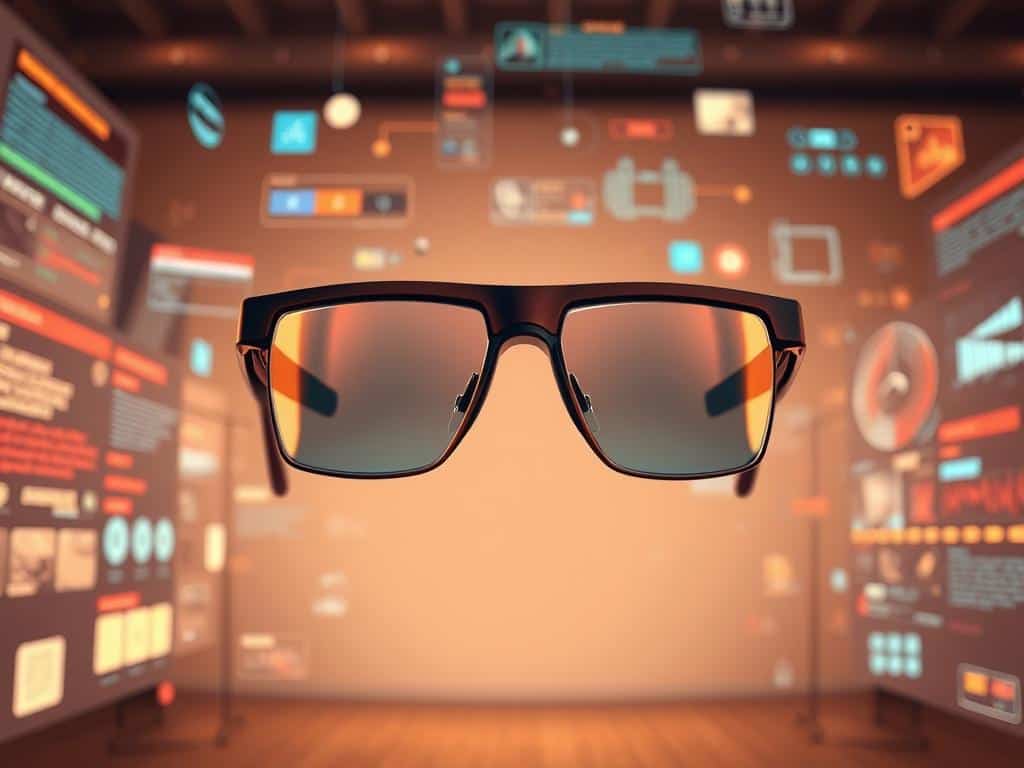
Did you know the global smart glasses market is expected to reach $83 billion by 2027? It’s growing at an amazing rate of over 34% each year. This shows a big comeback for smart glasses, also known as AR glasses, after years of doubt.
These devices have changed a lot from the early days, like Google Glass. Now, they mix looks with usefulness. They’re not just gadgets anymore. They’re becoming key items that will change augmented reality and mobile tech.
Key Takeaways
- The smart glasses market is forecasted to hit $83 billion by 2027.
- Current designs prioritize both aesthetics and functionality.
- Innovations are paving the way for essential wearables.
- AR glasses are evolving beyond niche products.
- Technological advancements are key drivers of resurgence.
The Resurgence of Smart Glasses
Smart glasses have seen a fascinating journey, starting with big dreams that hit roadblocks. Google Glass was a trailblazer but also a lesson. It had cool tech but faced issues like privacy worries and design flaws that didn’t click with people.
Historical Context and Early Failures
The path of smart glasses has been bumpy. Many early versions failed to win over the masses. The early days showed the tech’s limits, slowing down progress. Companies then focused on specific fields like healthcare and manufacturing.
Recent Innovations Driving Interest
Recently, smart glasses got a boost from new tech. Brands like Meta and Snap brought style and function together. Meta’s Ray-Ban partnership was a game-changer, blending fashion with advanced tech.
These updates aren’t just about looks. They also bring better AI and AR, drawing in more users.
Current Players in the Smart Glasses Market
The smart glasses market is changing fast. Meta Ray-Ban, Google, and new players are making big moves. Their efforts are exciting, with Meta and Google leading the way.
Meta and Ray-Ban’s Collaborative Efforts
Meta and Ray-Ban have teamed up to change smart eyewear. They’ve sold over a million units, showing people want cool tech. Their next steps include better displays for a deeper experience.
Google’s Exploration into Smart Glasses
Google is back in the smart glasses game. They’re working on the Android XR platform with eye-tracking tech. This could make Google’s smart glasses very appealing.
Emerging Competitors and Technologies
New players like Huawei and small tech firms are joining the fray. They’re bringing fresh ideas to the table. This competition could lead to even more cool smart glasses.
Smart Glasses: Features and Use Cases
Smart glasses are changing how we see the world. They bring together technology and usefulness in a new way. These devices let us use augmented reality to see digital info in our real world.
They make it easy to get important info without using our hands. This makes our lives easier and more convenient.
Integration with Augmented Reality (AR)
Smart glasses use augmented reality to make our lives better. For example, they can show directions right on the lens. This helps us navigate without getting lost in distractions.
This shows how technology is moving from simple devices to something that makes our world richer. The ease of use is why many people are drawn to these glasses.
Potential Applications in Daily Life
Smart glasses have many uses beyond just finding our way. Stores can use them to show product details right away. This helps us make better choices when we shop.
They also make our daily tasks easier. We can get alerts or reminders without needing our phones. This makes our lives more efficient and enjoyable.
Enhancing User Experience Through AI Agents
AI agents in smart glasses are a big step forward. They help us by understanding what’s going on around us. For example, they can give us tips during meetings or remind us of appointments.
This makes our glasses more than just tech. They become a personal assistant that makes our day-to-day better.
Conclusion
Looking at the smart glasses sector, it’s clear this tech is changing how we see the world. Companies like Meta and Google are pushing the boundaries with new features. This shows a big move towards making smart glasses more useful and attractive.
Even though there are challenges, the work on smart glasses is promising. They are becoming a strong player in wearable tech. This is thanks to the focus on making them better and more appealing.
The future of smart glasses looks bright, thanks to AI. AI could make using smart glasses easy and natural. Soon, they might be a key part of our daily lives.
In short, smart glasses are on the rise in wearable tech. They could soon be a big deal. I’m excited to see how they’ll change our lives and routines.
