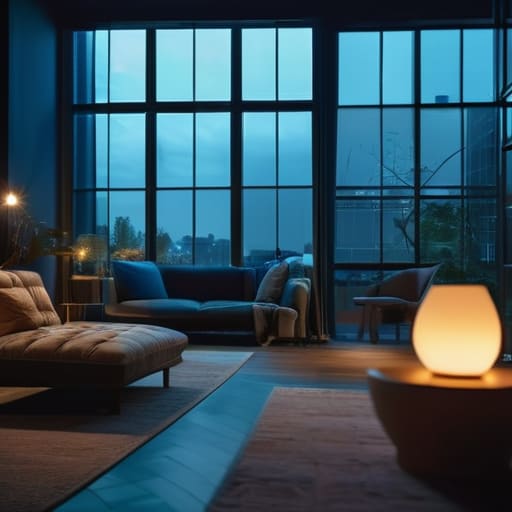
I was sitting in my workshop last night, trying to recalibrate “Newton”—my custom-built smart lighting controller—when it hit me how quiet the neighborhood has actually become. I remember the late 90s in the Valley, where the hum of life outside was constant, but lately, it feels like we’ve all retreated into these highly optimized, digital cocoons. People love to blame complex socioeconomic shifts or “changing cultural values” for this trend, but honestly, I think we’re looking at it all wrong. The real reason why people are going out less than they used to isn’t some grand societal collapse; it’s that we’ve accidentally built perfectly efficient fortresses right in our living rooms.
I’m not here to give you a lecture on sociological data or some dry academic breakdown. Instead, I want to pull back the curtain on how our own obsession with convenience and “smart” living is reshaping our social habits. I’ll be sharing some straight-talk insights based on my years in the tech trenches, looking at how we can reclaim our connection to the physical world without having to throw our gadgets out the window. Let’s figure out how to use tech as a bridge, rather than a barrier.
The Rise of Digital Entertainment and Streaming Dominance

Let’s be real: when was the last time you actually felt the need to trek across town just to catch a movie? I mean, I love the theater vibe, but my setup at home is getting hard to beat. Between the ultra-fast fiber internet and my latest smart lighting project—I’ve dubbed it “The Edison Experience”—I can basically turn my living room into a private IMAX theater with a single voice command. This massive rise of digital entertainment and streaming has fundamentally changed our relationship with leisure. Why deal with overpriced popcorn and sticky floors when you can curate a bespoke cinematic experience from your own couch?
It’s not just about laziness, though; it’s about the sheer frictionless nature of modern consumption. We’ve become accustomed to instant gratification. With a few clicks, we have access to more content than a 90s video rental store could hold in a decade. This shift creates a bit of a feedback loop: as our home ecosystems become more immersive and personalized, the perceived “value” of leaving the house starts to diminish. We aren’t just watching shows anymore; we’re building highly optimized, high-tech sanctuaries that make the outside world feel a little bit… unnecessary.
How Remote Work Is Reshaping Our Social Life Dynamics
It’s also worth noting that while we’re all becoming masters of the digital realm, sometimes we just crave that low-stakes, real-time connection that a pre-recorded stream or a scheduled Zoom call can’t quite provide. I’ve found that when the isolation of a smart home starts feeling a bit too heavy, finding a community of like-minded people online can be a total game-changer for maintaining a sense of belonging. If you’re looking to break out of your own bubble without the pressure of a formal video call, checking out some free Canadian chat rooms can be a surprisingly effective way to spark a spontaneous conversation and feel a little more plugged into the social world again.
Then there’s the elephant in the room—or rather, the elephant in the home office: the massive shift in how we actually spend our working hours. I remember when “going to work” meant a commute, a coffee run, and those spontaneous, unplanned chats by the water cooler. But now? The impact of remote work on social life is something I see playing out every single day in my consulting sessions. When your office is just a few steps from your bed, the natural friction that used to force us into public spaces has vanished. We’ve become incredibly efficient at staying stationary, and while my custom-built smart lighting system (I call him ‘Edison’ for some reason) helps me stay focused, it doesn’t replace the human energy of a shared workspace.
The truth is, we’ve optimized our lives for convenience, but we might be accidentally optimizing ourselves into isolation. Without that forced daily interaction, our social muscles are starting to atrophy. It’s not just about laziness; it’s about how our entire daily rhythm has shifted toward a homebound lifestyle that makes the idea of “getting ready to go out” feel like a major logistical hurdle.
Reclaiming the "Real World": 5 Ways to Break the Digital Loop
- Schedule “Analog Afternoons” to combat the convenience trap. It’s way too easy to let a smart speaker order your dinner and a streaming service pick your movie, so try setting a hard rule: no screens after 6 PM on Saturdays. It forces you to actually interact with your space—and your people—without a glowing rectangle in the way.
- Use your tech to facilitate, not replace, social connection. Instead of just sending a meme in the group chat, use your smart home setup to coordinate a real-life meet-up. I’ve started using my “Newton” smart hub to send automated reminders to my friends for our monthly board game nights; it’s much harder to ignore a calendar ping than a casual text!
- Curate “Micro-Adventures” to lower the barrier to entry. Sometimes we stay in because the idea of a “big night out” feels exhausting. Instead, aim for something small—a quick walk through a local park or a coffee at that new shop down the street. You don’t need a grand plan to get out of the house; you just need a reason to step past your front door.
- Audit your digital dopamine. We’re often so stimulated by the rapid-fire content on our phones that real-world interactions feel “slow” by comparison. Try a digital detox for a few hours before you plan to head out; it resets your brain so that a conversation over a drink actually feels engaging again.
- Turn your home into a launchpad, not a bunker. It’s easy to let your living room become a cozy, high-tech cocoon where you never want to leave. Make sure your smart tech is serving your lifestyle, not trapping you in it. If your home is perfectly optimized for comfort, you have to be even more intentional about making the effort to go out and experience the world.
Finding the Balance in a Hyper-Connected World
When we step back and look at the big picture, it’s clear that we aren’t just “being lazy”—we are navigating a massive shift in how we interact with the world. Between the sheer gravitational pull of high-definition streaming and the way remote work has effectively turned our bedrooms into offices, the friction of “going out” has increased significantly. We’ve built these incredible digital ecosystems that cater to our every whim, making the convenience of staying in feel almost irresistible. While these advancements have streamlined our productivity and entertainment, they’ve also inadvertently created a sort of digital gravity that keeps us tethered to our living rooms more often than we might realize.
But here’s the thing: technology should be the wind in our sails, not the anchor that keeps us stuck in port. My goal isn’t to tell you to unplug everything and go live in a cabin, but rather to encourage us to use these smart tools to enhance our human experiences, not replace them. Let’s use our tech to schedule that long-overdue dinner, to automate the boring stuff so we have more energy for real-world adventures, and to ensure our gadgets are serving us, rather than the other way around. After all, even my little smart-hub, Newton, knows that you can’t appreciate the laws of motion if you never actually move.