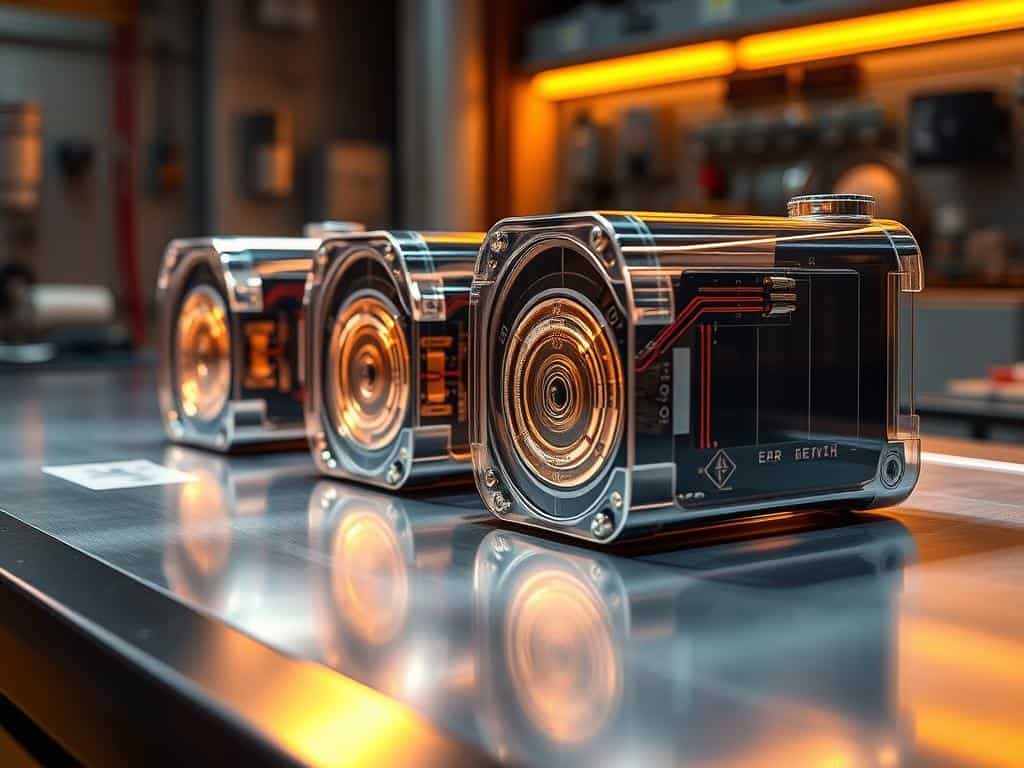
Did you know over 50% of all battery production goes to electric cars and gadgets? As we rely more on these, we need batteries that last longer. Next-gen batteries are on the horizon, promising to last weeks, not just hours.
Experts like Jeff Chamberlain from the Joint Center for Energy Storage Research say many claims seem good. But, the real hurdle is making these batteries on a large scale. This could change how we store energy, making it more urgent than ever.
Key Takeaways
- The production of batteries for electric vehicles and electronics exceeds 50% of total battery manufacturing.
- Next-gen batteries could significantly extend battery longevity beyond current capabilities.
- Manufacturing complexities pose challenges for widespread adoption of new battery technologies.
- Industry experts point to a need for innovations in battery chemistry to meet growing demands.
- Advancements in battery technology are essential for the future of renewable energy solutions.
The Future of Next-Gen Batteries
Battery technology is on the verge of a big leap, thanks to the limits of lithium-ion batteries. These batteries are everywhere but have their downsides. They can’t hold as much energy as needed, which limits how far electric cars and gadgets can go.
Current Limitations of Lithium-Ion Technology
Lithium-ion batteries have their flaws. They don’t pack enough energy, charge slowly, and can catch fire. We need new solutions to fix these problems. This will make battery-powered devices better and safer for everyone.
Promising Developments in Battery Chemistry
New battery chemistry is coming, with solid-state tech leading the way. Companies are looking into new ways to make batteries better. For example, research on multivalent batteries and lithium-free tech could change the game.
Solid-state batteries are a big deal. They promise more energy and safety, which could solve many current battery issues.
Advancements in Battery Technology
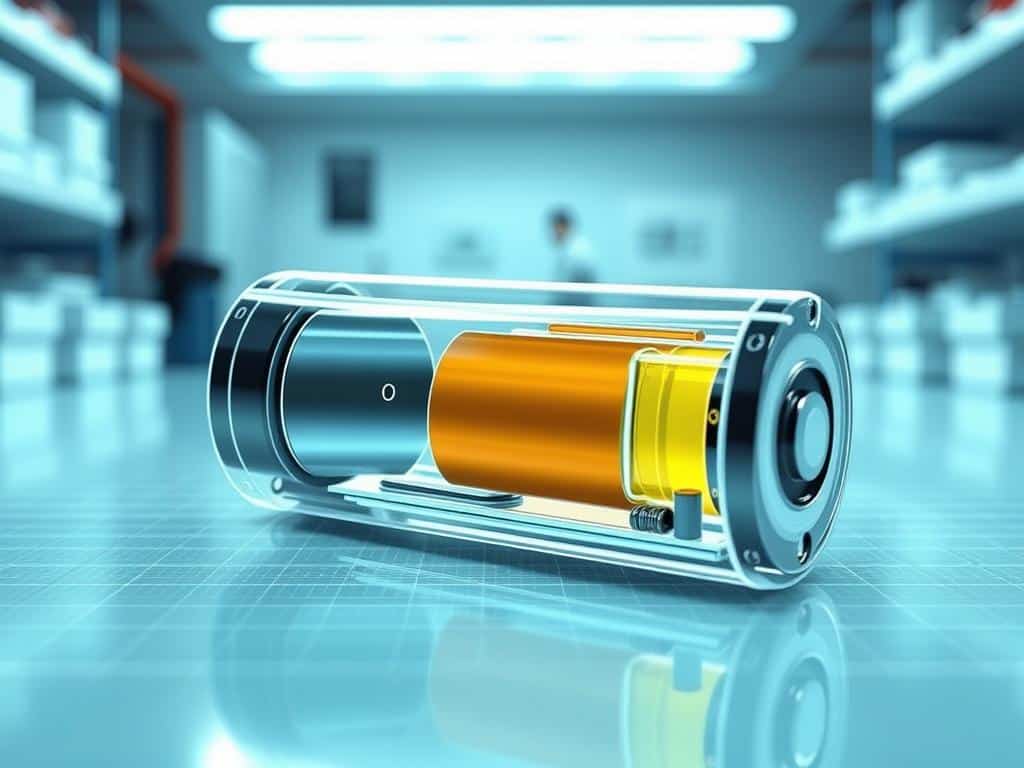
Exploring the future of EV battery tech, I’m really excited about solid-state batteries. They use solid electrolytes, unlike the liquid in traditional lithium-ion batteries. This change brings better performance and safety.
These batteries could hold more energy, meaning electric cars might go farther on one charge.
Solid-State Batteries: A Game Changer
Solid-state batteries are a big deal because they solve many safety issues of lithium-ion cells. They cut down on the risk of leaks and fires. This is because they use solid materials instead of liquid.
They also tackle environmental and performance problems of old batteries. This makes solid-state tech a big player in the battery world.
QuantumScape’s Innovations and Predictions
QuantumScape, a Silicon Valley company, is leading the charge in battery tech. They’re making solid-state batteries that could let electric cars go up to 400 miles on one charge. Recharging could take just 15 minutes.
This shows a huge leap in efficiency. It also makes solid-state batteries look like the future of EV battery tech.
How Solid-State Batteries Improve EV Range and Safety
Solid-state batteries do more than just increase range. They also cut down on the risk of battery damage. This means they last longer and are safer for users.
The car industry is watching closely. With more companies working on solid-state batteries, electric cars are set for a bright future.
Conclusion
The world of battery technology is changing fast, with a big push towards solid-state batteries. These could change how we think about batteries for the better. Companies like QuantumScape are leading the way, promising batteries that last weeks, not just hours.
This shift is not just about new chemistry. It’s also about making these batteries on a large scale safely. Solid-state tech offers better safety and efficiency, but scaling up production is a big challenge. Yet, many are working hard to make this dream a reality.
Even with challenges, the future of batteries looks bright. Soon, we’ll see products that show off these new advancements. This is great news for battery fans and everyone who uses them. The future of batteries is exciting, and it’s coming soon.
