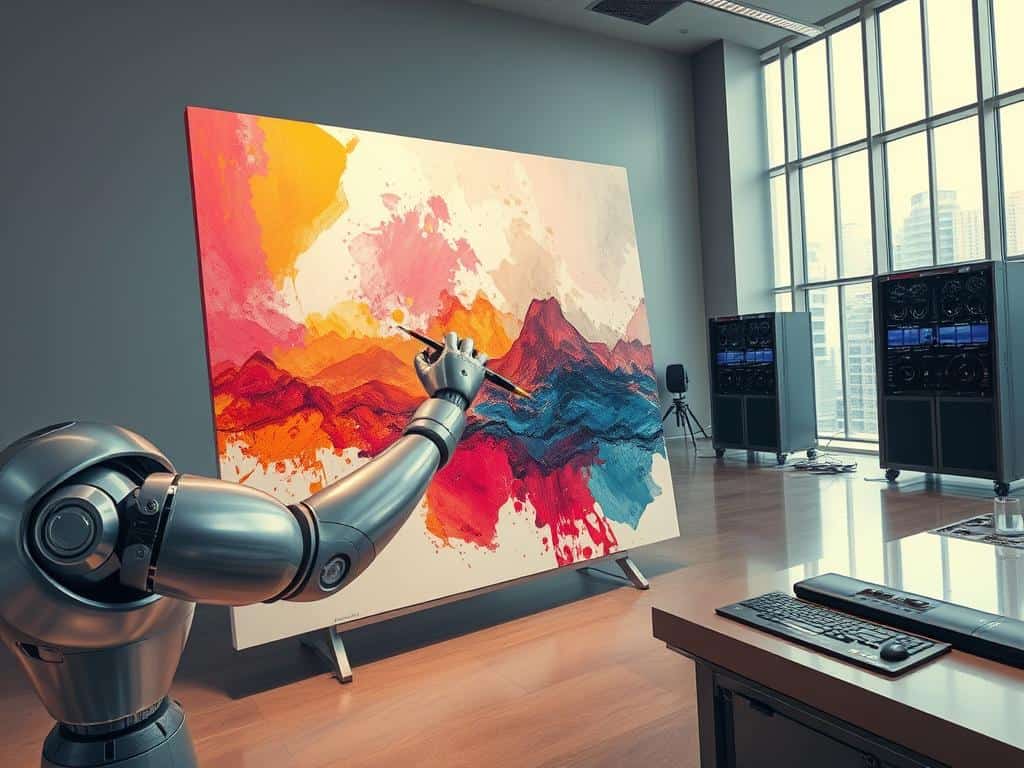
Did you know the global market for AI in Art is expected to hit $300 million by 2025? This shows how big of an impact technology is making on creativity. Robots in art have moved from simple tools to advanced creators. They can make detailed masterpieces, something humans used to do alone.
The rise of digital creativity is changing how we see art and creativity today. We’re seeing new kinds of art made by AI. This shows that creativity’s future is not just for humans, but also for robots.
Key Takeaways
- AI-generated artworks are on the rise, with market growth projected to exceed $300 million by 2025.
- Robots in art are redefining traditional artistic boundaries.
- Digital creativity involves a collaborative effort between humans and AI.
- The evolving role of technology challenges our traditional notions of artistry.
- AI in Art opens up new possibilities for artistic expression and exploration.
- Robotic precision in creating art can enhance traditional techniques.
The Revolution of AI in Art
AI art has changed how we create today. It’s making digital art a new world. Tools like Lensa turn simple photos into amazing art. This shows how tech and art are blending in a big way.
The Rise of AI-Assisted Creativity
Platforms like DALL-E and Midjourney let people make beautiful art with just words. This has opened up art to more people. Even those who aren’t trained artists can now make stunning work. It’s a big step towards making art more for everyone.
AI and Human Collaboration
AI art is exciting, but it also raises questions. Artists worry about losing their unique touch. The goal is to use AI in a way that keeps human creativity special. Finding this balance is key to the future of art.
Robotic Sculptors Transforming Traditional Techniques
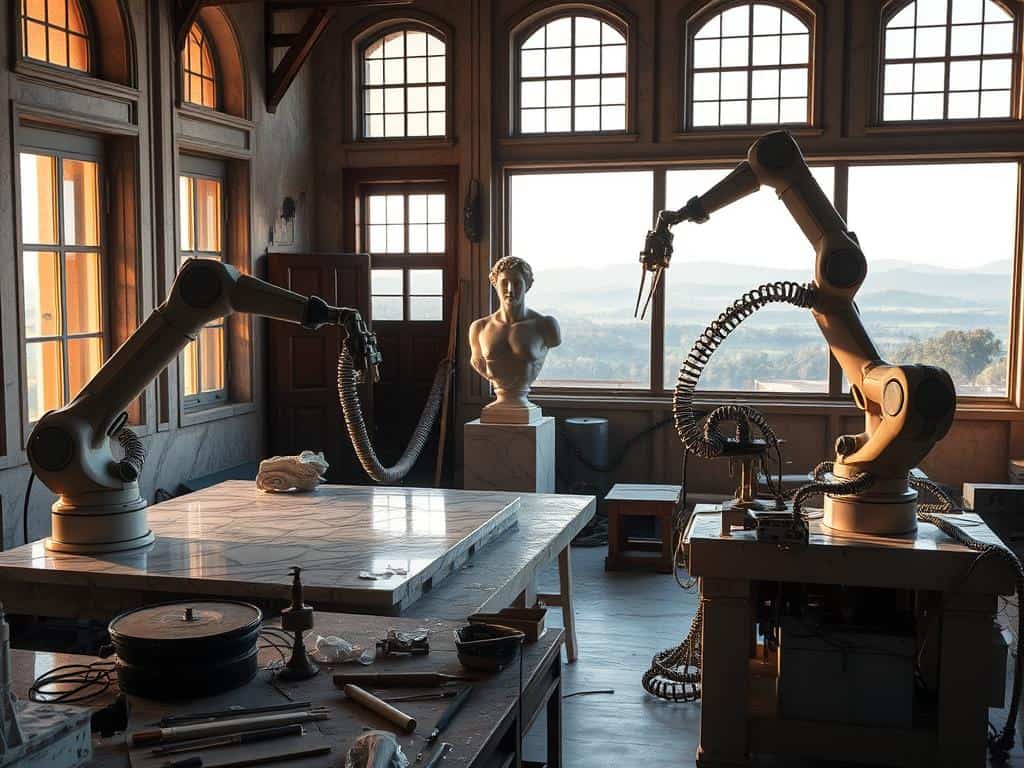
In recent years, robotic sculptors have changed the marble craftsmanship world. These advanced machines are making art creation faster and more precise. They use technology to improve old carving methods while keeping the art true to its form.
Marble-Sculpting Robots
Robotor’s Robo is a great example of this new technology. It can make detailed designs quickly and accurately. This robot needs only a little help from humans, thanks to its 99% automation.
Robotic sculpture makes creating art faster. It takes months or even years off the time needed for traditional stone carving. Artists can now make more complex works without the physical challenges of manual carving.
Debate within the Art Community
As robotic sculptors become more common, there’s a debate in the art world. Some say machine-made art lacks the human touch. They believe the human element adds creativity and emotion to art.
Others see these machines as a chance to explore new art forms. They argue that robotic sculpture brings consistency and new ideas to the table.
Conclusion
The future of AI in art is more than just tech. It’s a big change in how we see creativity. AI has opened new ways for artists to express themselves digitally. This change is making art and artists work together in new ways.
This partnership between humans and machines is exciting. It shows that AI can help us be more creative, not less. The talk about AI in art should focus on its power to make art bigger and better.
Technology is not replacing human touch in art. Instead, it’s helping artists make their ideas come to life in new ways. This could lead to a new era of art, where humans and machines create amazing things together.
AI is making art more exciting and possible. By using technology in our art, we’re on the edge of something new. This mix of human ideas and machine power could lead to incredible art that we never thought possible.
