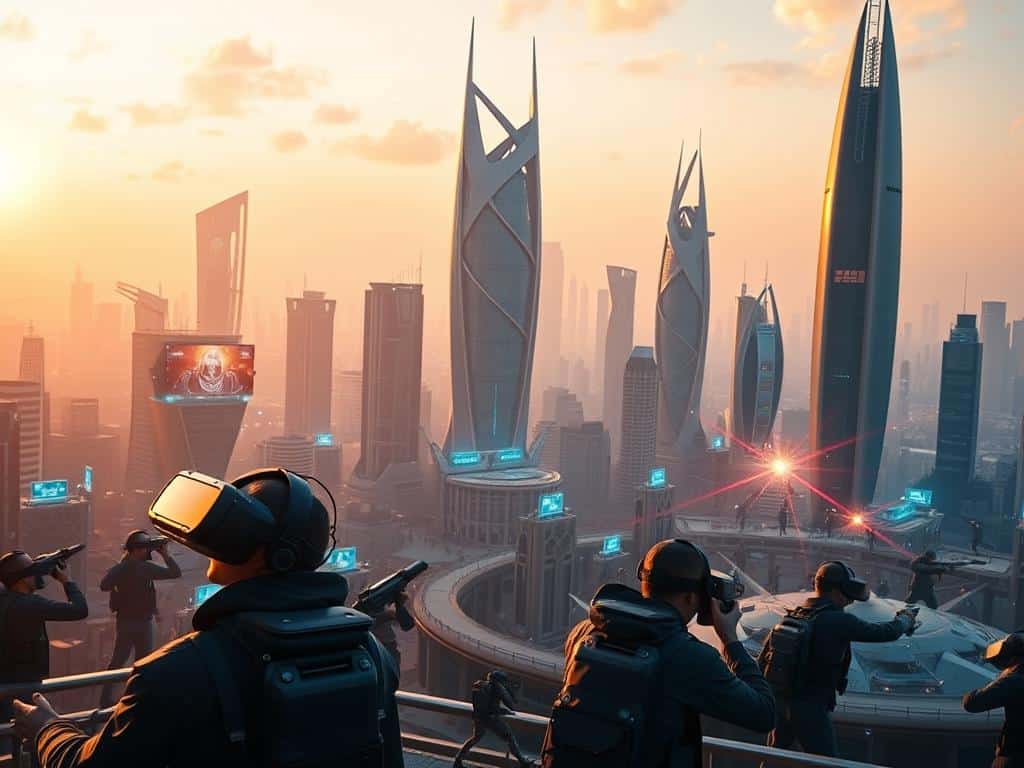
The global gaming industry is expected to soar past $300 billion by 2025. This growth reveals the future of gaming, showcasing VR and AI opponents that will change entertainment. In 2050, I picture a universe where players enter worlds of incredible realism and interaction.
These worlds will be alive, thanks to top-notch gaming tech. Artificial intelligence will power these spaces, creating experiences that adjust to how we play. This progression not only promises great fun but also brings up important questions. We’ll face ethical dilemmas with almost real avatars in these digital places.
Our interactions in game universes will evolve, driven by our actions and smart algorithms. This makes gaming a dynamic ecosystem, not just a story to follow.
Key Takeaways
- The gaming industry is set to exceed $300 billion by 2025, highlighting its rapid evolution.
- By 2050, VR gaming will offer immersive experiences that feel incredibly real.
- AI opponents will personalize challenges based on individual player styles.
- Ethical implications will arise from interactions with near-human avatars.
- Self-evolving game universes will shift focus from linear narratives to dynamic ecosystems.
The Evolution of Future Gaming
The world of gaming is changing in big ways. We’re moving from games with fixed stories to worlds that change based on how you play. This means games now need to be innovative to offer a truly deep experience.
From Static Worlds to Dynamic Ecosystems
Older games had set stories which, while fun, were the same every time you played. Now, we’re seeing games where your actions really shape the world. Games like No Man’s Sky are great examples, with huge worlds built differently for every player.
Advancements in AI-Driven Game Design
Artificial intelligence is making games smarter and more engaging. Characters in games now can react in realistic ways to what you do. This brings games to life, offering new surprises and challenges that keep players coming back.
Procedural Generation and Self-Evolving Narratives
Procedural generation is key to creating stories that grow as you play. Each game session feels new, making every playthrough stand out. This approach not only makes games more immersive but also adds to their replay value.

AI Opponents and Companions in Gaming
Gaming has changed a lot, thanks to AI opponents. These smart characters make games more engaging. They change their actions to match how you play, making every game unique.
The Role of AI in Enhancing Player Experience
AI opponents make games more exciting. They learn from how you play and change their moves. This makes games feel real and keeps you guessing what will happen next.
Adaptive AI in Competitive Environments
In competitive gaming, adaptive AI is key. It learns from each game, becoming harder to beat. This means players always have to think of new ways to win.
Emotionally Intelligent NPCs
New NPCs can understand how you feel. They change their reactions based on your choices. This makes the game feel more real and connects you to the story.
Conclusion
Thinking about the future of gaming, I see a big change coming. We’re close to a big shift. AI will make games more real and change how we play.
By 2050, games will be like stepping into another world. These worlds will grow and change based on what players do.
Gaming is moving towards worlds that grow on their own, a big change from the past. Games will use AI to create endless possibilities. These games won’t just be for fun; they’ll be whole universes that react to us.
This new kind of gaming will make us see games in a new way. We’ll get to explore worlds that change as we play. It’s going to make gaming more personal and exciting.
But, as we get into these new games, we have to think about the right and wrong of AI in gaming. It’s important to use tech to improve our lives, not make them worse. We have to find the right balance in this new gaming world.
